
The Stove Industry Association (which represents stove manufacturers, suppliers and retailers across the UK) have been misleading their customers on their website regarding the efficiency and emissions of wood burning stoves.
A formal investigation by the Advertising Standards Authority was launched after a complaint from a member of the public.The Advertising Standards Authority found that:
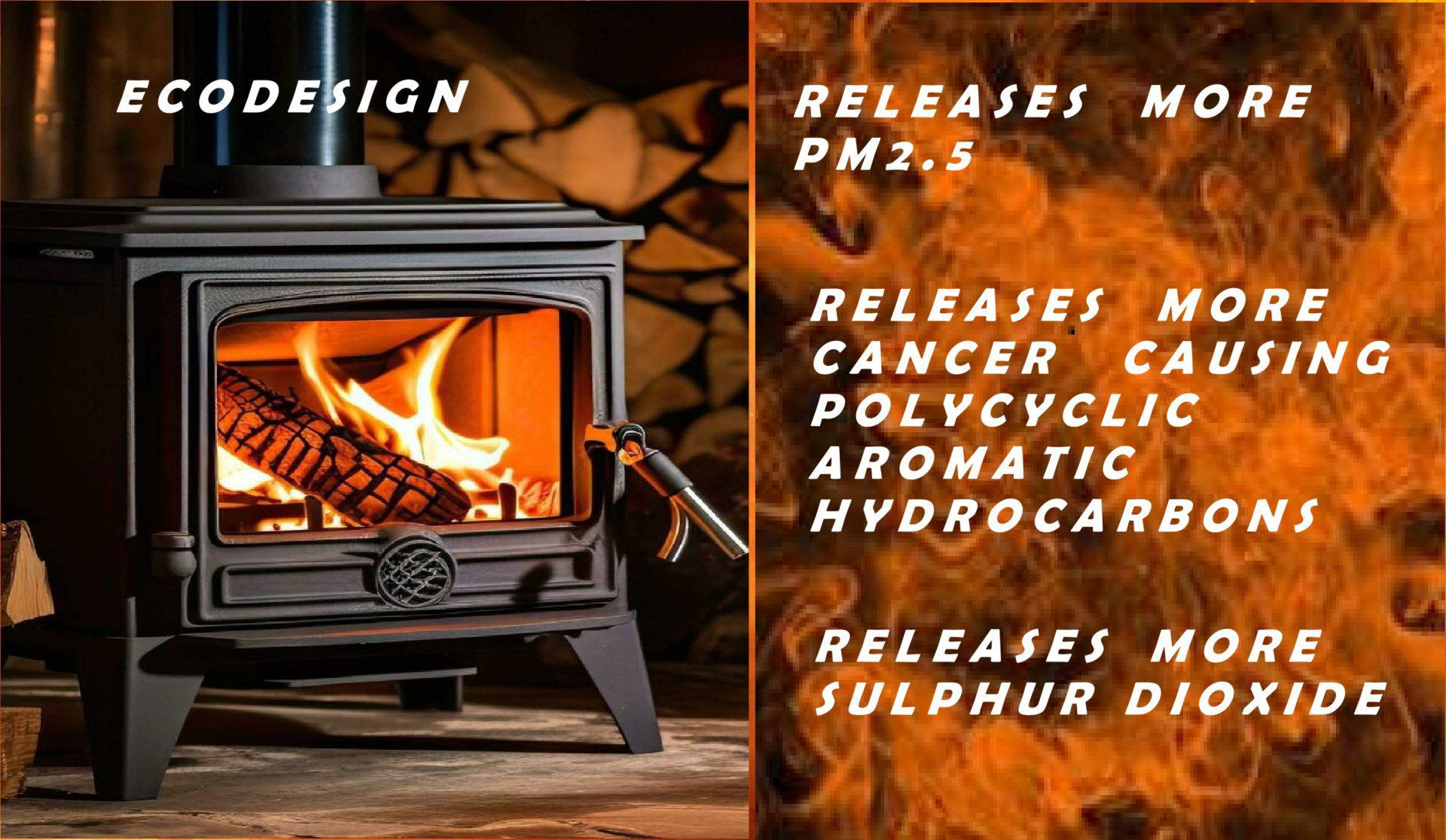
1. Modern stoves emit more pm2.5 than the older stoves listed in the SIA evidence.
2. Modern stoves may emit less of some pollutants than older stoves, but they emit more of others, like carbon monoxide, methane, and sulphur dioxide.
3. Dry wood burned in a modern stove emits more sulphur dioxide, carbon monoxide and several other toxins than in an open fireplace.
4. The evidence provided did not show that modern stoves, when used correctly, would produce a “very low” level of emissions compared to other methods of heating a living space.
The ASA found that the data submitted by the Stove Industry Association did not consistently demonstrate lower emissions across all key pollutants, such as carbon monoxide and sulphur dioxide, and in some cases, showed increases.
The ASA assessed the most recent data for GHG emissions and other pollutants, from 2023, in relation to burning dry wood in the older stove types, a modern stove and an open fireplace.
The data showed modern stoves emitted more PM2.5 than the older stove types listed. It showed a comparative decrease in some emissions, such as methane, nitrogen oxides, and black smoke but other emissions such as sulphur dioxide, carbon monoxide and several other toxins were much higher.
The ASA also found that studies from Imperial College London and trade reports proved that wood stoves were not low-emission in real-world indoor environments.
The ASA ordered that the adverts must not appear again in their current form and instructed the SIA to ensure future marketing avoids making broad environmental claims without robust evidence. It also told the organisation to clarify the basis for any future comparisons between stoves and other heating methods.
If you see any websites or fireplace shops making these false claims, then please let us know. Consumers need to be fully informed before they make a decision.
The full ASA ruling can be read here.